“Better mobility means truly transforming cities”
Dr. Engineer Gian Luca Erbacci: a lifetime of international experience in infrastructure development
by Vanna Verzelli
Il nuovo Diario Messaggero · Thursday, 23 July 2026 ·
“Mobility improves the environment and people’s lives, and it has no political colour.” This is Gian Luca Erbacci’s view. Born in Bagnacavallo, after earning his diploma from the Valeriani scientific high school in Imola, he graduated from the University of Bologna in Mechanical Engineering in 1987 and in Astronomy in 2001. He lives in Riolo Terme, is married with three children, and retired at the end of 2025. He currently sits on several boards of directors and serves as a strategic advisor on automation, mobility and industry more broadly, both in Italy and abroad. His professional career began at Lamborghini Automobili in Sant’Agata Bolognese, where he worked on vehicle industrialisation. He subsequently moved into automation and machine tools, holding various management roles and senior positions at Comau, Jobs and Mandelli. In 1998, he embarked on a new chapter with Fiat Ferroviaria, which later became Alstom, a French industrial group active in the construction of trains, metros, trams and railway infrastructure, and a global leader in smart, sustainable mobility. Within the French group, he held several senior positions, including responsibility for Africa, the Middle East and Central Asia, and served as President for Europe for the last eight years.
An impressive career. You have worked extensively abroad.
It has been a wonderful experience. I am a citizen of the world and have always adapted to the local culture. University gave me a technical education; the Fiat Group gave me management skills.
How did your passion for mechanical engineering and astronomy begin?
I remember my father taking me to the Imola racetrack to watch motorcycle races: Giacomo Agostini was the legend. Later, I became fascinated by space exploration and the television images of the 1969 Moon landing. That sparked my curiosity and thirst for knowledge.
You are currently a strategic advisor on automation and mobility.
I continue to travel and support companies that need to reorganise. To me, reorganisation means working with people and investing in them, while making the most of local resources. Nothing can be achieved alone.
When you say that you adapt to the local culture, what do you mean?
To provide a service, the first thing you need to do is understand the local culture, how people move around and what their habits are. In Dubai, for example, metro trains were internally divided into three classes: Gold Class, carriages for women and children, and carriages for men. This reflected the local culture. The classes were later abolished after the new trains proved so successful that passenger flows became too high to maintain the separation.
Is urban mobility simply a matter of traffic?
Mobility infrastructure plays an important role. Designing a new transport route in a city means improving quality of life, transforming the city and introducing a different way of experiencing urban space. Algiers, for example, is a chaotic metropolis: the introduction of the tram was a social and urban-planning revolution. It changed the face of the city by modernising and regenerating it. Installing the tracks forced the city to rethink and redistribute public spaces, giving them new life. Today, passengers getting off a tram can connect to the metro and suburban trains.
What areas should we work on in the future?
It is essential to reduce emissions. We therefore need to improve rail infrastructure, increase rail freight, reduce motorway traffic and introduce intelligent traffic management on motorways to prevent congestion and emission peaks. We must also continue to improve urban mobility by investing in public transport.
Through your work, you have come to know many countries and cities. Which are closest to your heart?
Turkey impressed me with the richness of its cultures; its Asian side has a unique, special charm. I am very fond of England because it values local identities and promotes its cultural heritage. However, the colours and light of Rome are unique: it is a complete, chaotic and irreverent city, capable of lightening any situation.
An anecdote?
In 2017, as head of the Middle East, Africa and Central Asia, I was meeting with clients in Algiers. It was Ramadan, so people were starving during daylight hours. At one point, the deputy director stood up and returned with a Lavazza coffee, saying: “We bought a coffee machine for you, and we would like to offer you a coffee as a token of friendship.” That is the value of human relationships that go beyond business.
What advice would you give young people?
Today I mentor students at the Politecnico di Milano in Rome as they prepare projects. It is voluntary work. They come from different regions of Italy and are curious, attentive and polite. I believe it is important for young people to gain work experience during the summer from the age of 16: it helps them understand themselves and choose the path they want to follow. An intercultural work experience abroad in the first years after graduation provides tools for professional growth and broadens the mind.
| Sustainable mobility for all is a challenge that requires systemic change. Pope Francis’s words in the encyclical Laudato si’ come to mind, concerning the deterioration in the quality of human life and social decline. “Today, for example, we see the disproportionate and disorderly growth of many cities, which have become unhealthy places to live, not only because of pollution caused by toxic emissions, but also because of urban chaos, transport problems, and visual and noise pollution. Many cities are vast, inefficient structures that consume excessive amounts of water and energy. There are neighbourhoods which, despite having been built recently, are congested and disorganised, with insufficient green space. The inhabitants of this planet were not meant to live increasingly surrounded by cement, asphalt, glass and metal, deprived of physical contact with nature.” |
Original captions
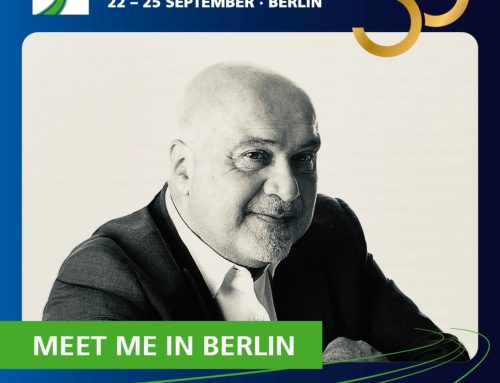
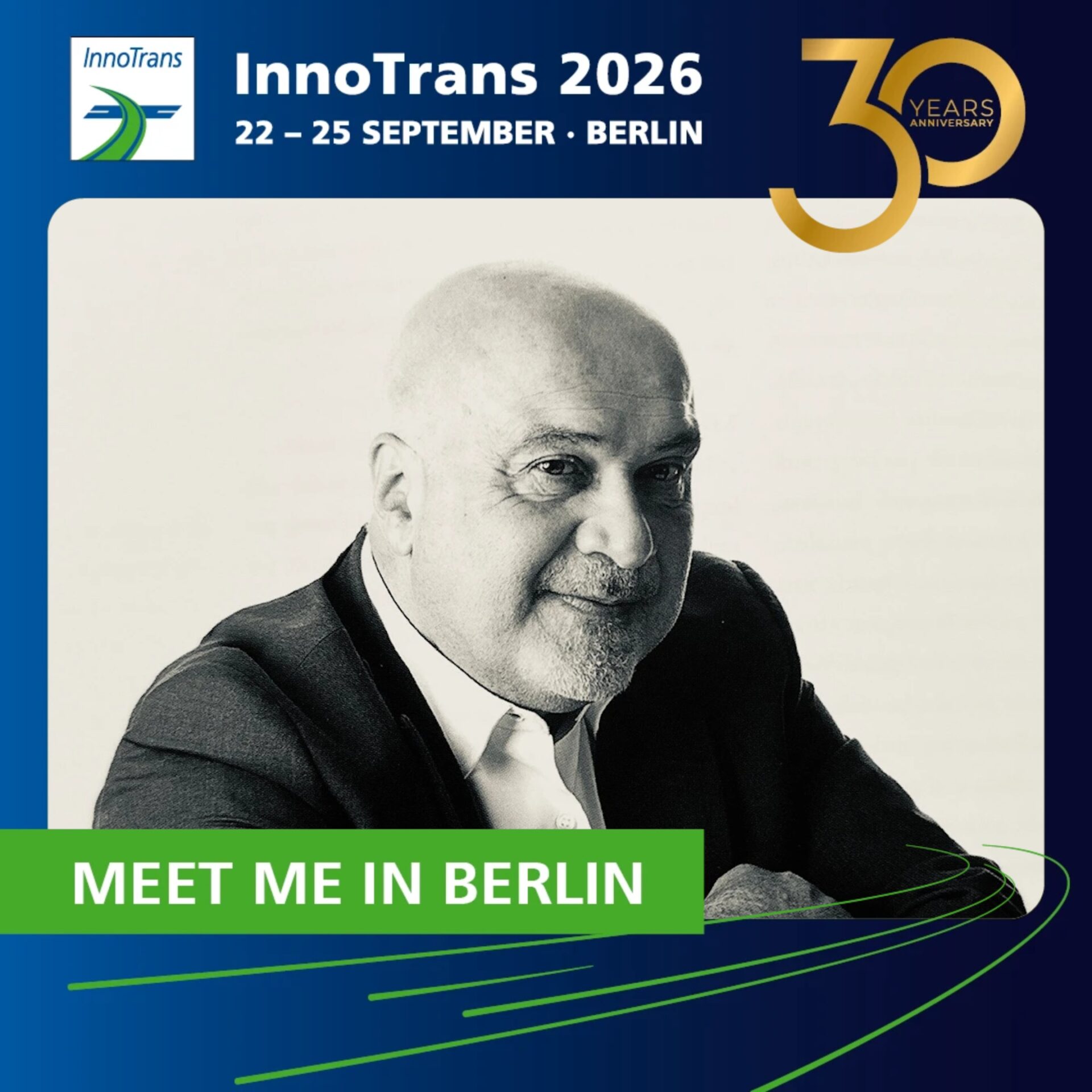
Photograph caption. Pictured: Gian Luca Erbacci, who holds degrees in Mechanical Engineering and Astronomy, lives in Riolo Terme and has been retired since 2025.
Side panel. An international manager, he served as an executive at Lamborghini, Fiat Ferroviaria and the French industrial group Alstom.